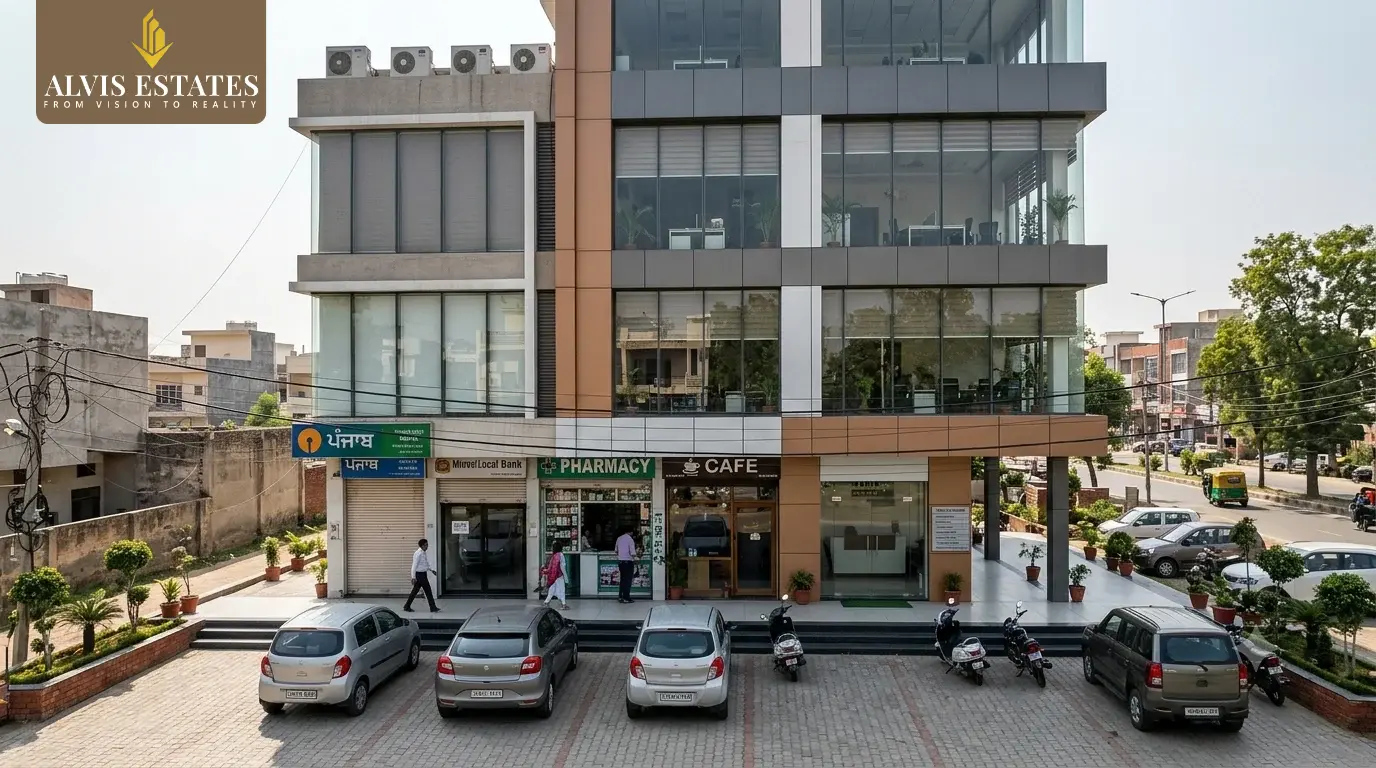
How to Choose Commercial Property for Different Businesses
Depending on what type of business you operate, the suitability of a commercial property will vary. Different business types will require different space layouts, expectations from customers and meet different Business Requirements.
As an investor or tenant of commercial property, you should consider how suitable the property is to meet your business operations and future goals. Ensuring this will mean that money is not wasted unnecessarily and that the space can be utilised effectively.
1. Location and Accessibility
Consider the location of a property.
For retail businesses, a visible location with high foot traffic and ease of access for customers is ideal. In clinics, it is important that patients can easily get to the building, including elderly people and people with special mobility needs. Within an office, it may be important to be well connected, close to business areas, and allow easy travel for employees.
Consider parking, transport links and road access.
Having good access to a location means customers can easily get to the location and business operations can run efficiently.
2. Layout
Ensure that the layout of the space suits your business.
Medical Practices may be required to have individual consultation rooms, reception areas, waiting rooms and areas for equipment. If they offer certain services, they may also need space for testing or small procedures.
An office space will generally require desks, meeting rooms, private cabins, communal areas and facilities for staff.
A retail space may require plenty of product display space, space for customers to move around, storage and till points.
Consider if the layout inside the property meets the requirements of your business, or if significant alterations will have to be made.
3. Visibility
Visibility of the property is important for retail businesses.
A property with good visibility, suitable signage and good exposure along the road can increase the likelihood of potential customers finding the business.
Clinics can benefit from having easily visible entrances and good signage so patients can easily find the practice.
Although offices may not require as much visibility in the street, having a professional entrance and easily identifiable buildings can create a better experience for clients/visitors.
How important visibility is, depending on the business model and location, and who the target customers are.
4. Infrastructure
Commercial properties should have suitable infrastructure within them.
Medical practices may require a reliable supply of electricity, water, good ventilation and plumbing to provide for equipment. Within an office, reliable electricity, internet connection, air con and enough electricity supply for the desks may be required.
Within a retail setting, suitable lighting, storage, fire safety and enough electricity for displays/equipment may be required.
Lifts, shared bathrooms, emergency exits, maintenance of the building and back-up electricity should be considered by businesses.
5. Permits and Compliances
The commercial property must be suitable for the business.
Buyers/tenants should check what land use has been approved, permitted building use, documentation relating to occupancy, and local regulations.
Depending on the business, further permits may be required. Medical businesses may require specific registration in relation to healthcare and meet requirements to be safe and appropriate within clinical settings. Retail businesses may require trade permits in line with local regulations.
Before committing to any agreements, it is important to ensure that the business can be conducted at the chosen location.
6. Parking
Depending on the business, parking requirements will vary.
Within a clinic, where many patients may come in during the day, having easy parking is very useful. Retail businesses benefit from easy access for customers, particularly if it is expected that customers will stay in the store for a while. Within an office, enough parking space must be available for employees, clients and business visitors.
Consider how much actual parking space is available.
7. Growth and requirements
To allow for growth of the business without unnecessary limitations, the commercial property must allow for current and future operations.
In an office, more desks/ meeting rooms may be required. In a clinic, new services may be offered meaning extra equipment and consultation space may be required. Within retail stores, more storage and display space may be required.
Consider if the property can be adapted within the building to meet future requirements. Consider if the building can allow additional requirements.
Summary
Many factors should be considered in order to select the correct commercial property. These include; location, layout, infrastructure, accessibility and appropriate compliance. Although requirements will vary depending on if it is a clinic, office or retail business, it is important to select a space which will allow effective operations in order to plan for the future. If you are looking to invest in commercial property, or find business space in Mohali and across Tricity, Alvis Estates can help find properties to suit your Business Requirements.